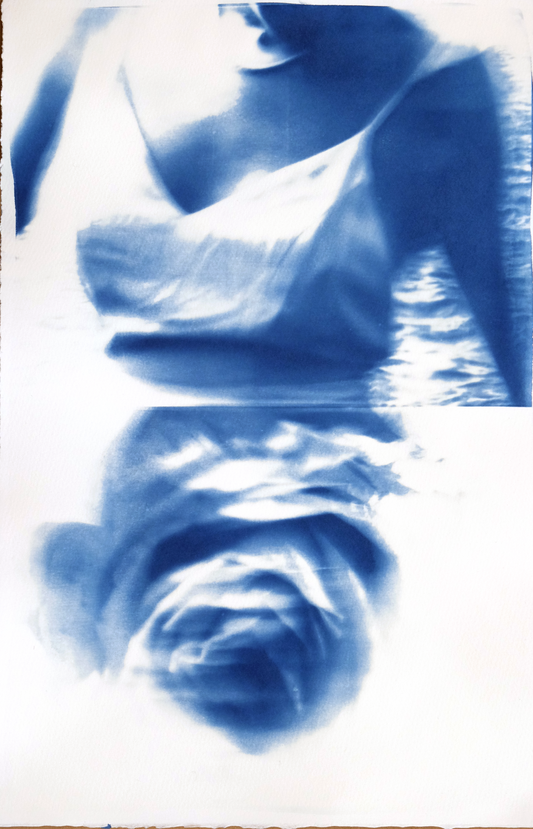
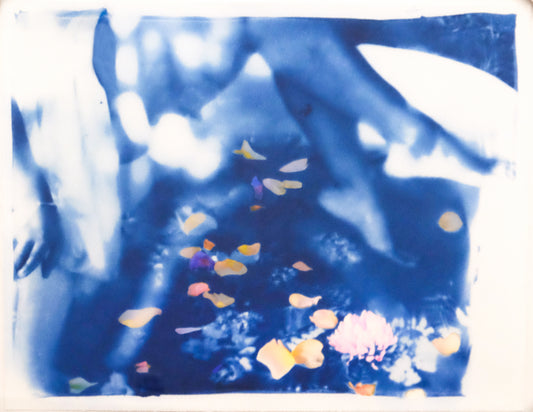
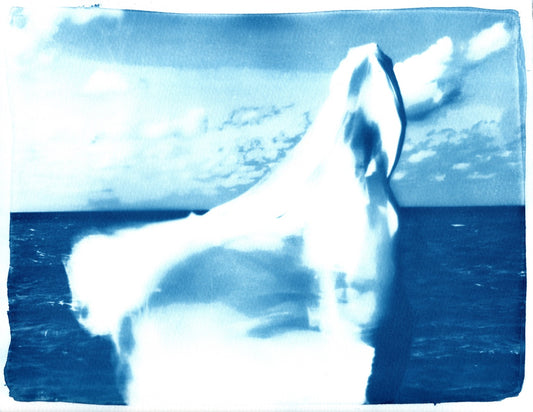
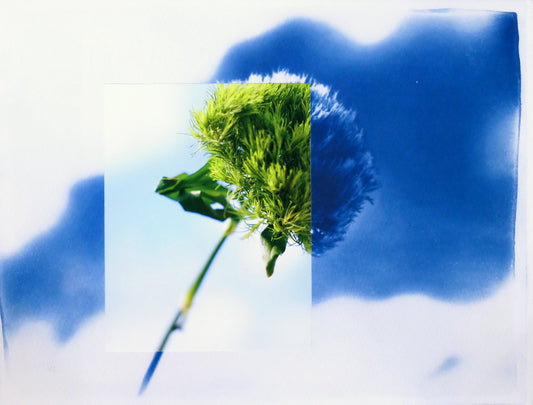
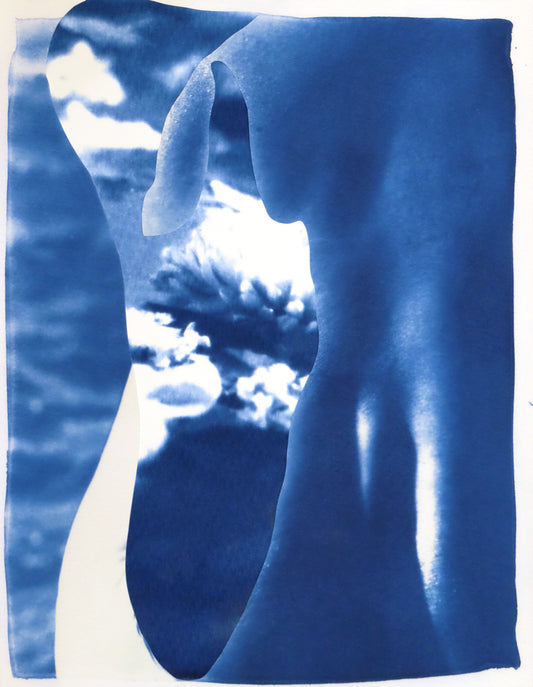
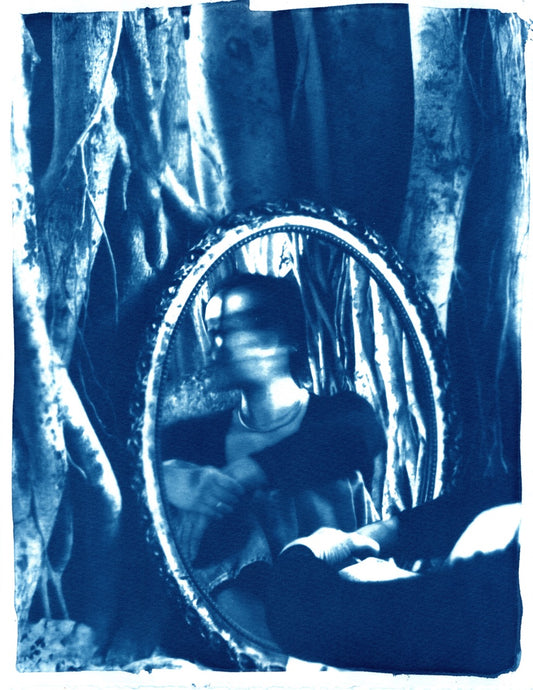
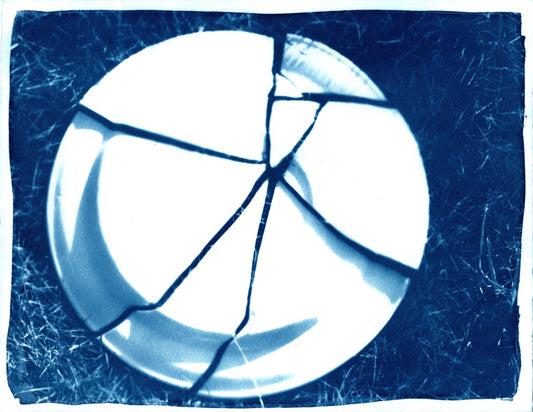
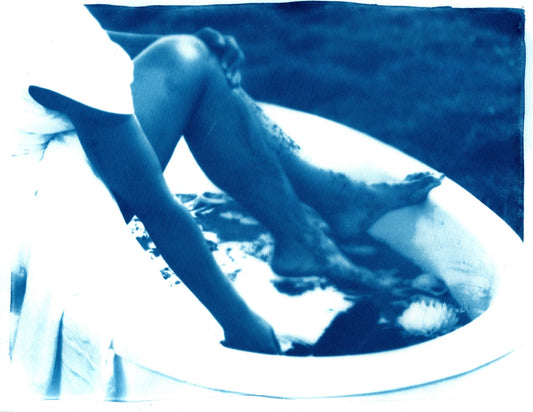
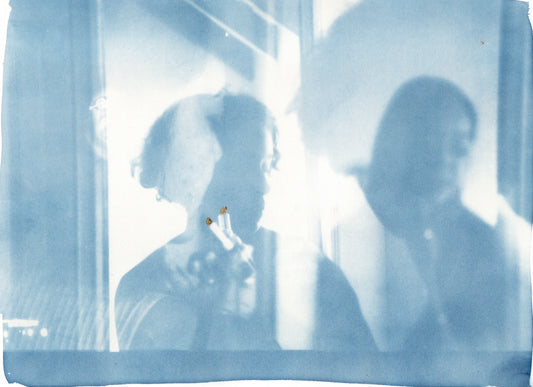
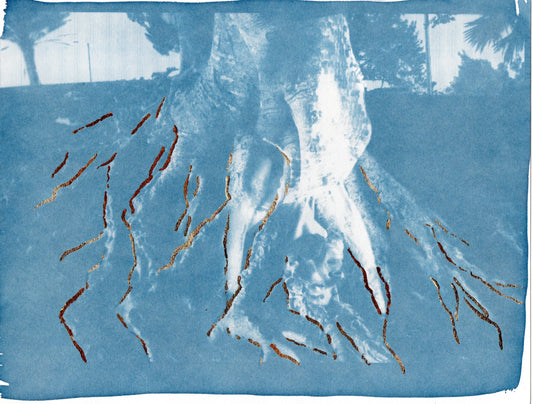
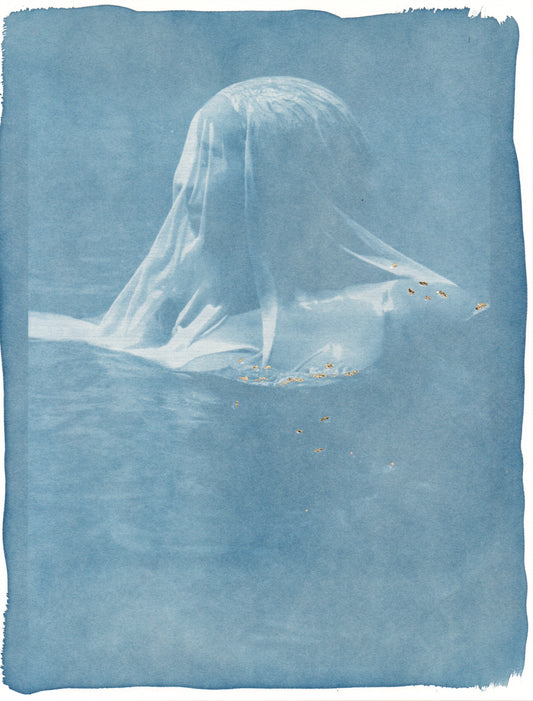
Better Would is an installation by Kimberley Fisher, developed in collaboration with Ish Yakub Corday, a visual storyteller and writer, and Blair Raughley Masters, a photographer. Together, they explore the tensions between care and obligation through an exchange of texts, photographic direction, and images, which Fisher translates into cyanotype and collage. Drawing on rituals of care – bathing, wishing, dreaming, planting – the works consider these acts as both sustaining and demanding, both intimate and relational, and shaped by expectation.
Earlier works are more linear and closely tied to grief and its processing – what Fisher describes as being held by grief. Cyanotype, dependent on time, exposure, and water, functions as both method and metaphor for healing. Later works shift toward holding grief rather than moving through it. Colour and collage become increasingly present, signaling a potential and futurity yet restrained by form and ritual. Delicate, precise layers of collmirror the careful labour of care, suggesting a cautious engagement with possibility rather than unguarded optimism. Subtle seriality runs throughout, with repeated forms and bodily allusions creating a sense of encountering an individual’s moments or memories across time – deeply particular, yet unexpectedly familiar.
The title Better Would speaks directly to this emotional terrain: the push and pull between wanting to connect with others and feeling bound by obligation to them; between moving through and moving on; the voice of the matriarch or elder who “knows better,” whose rituals of care are both sustaining and restrictive. The works on view inhabit this nuance, resisting easy resolution. Instead, they ask how care is learned, inherited, and carried, and what it means to hold it all together.
As an installation, Better Would invites viewers to move deliberately through the gallery. Pauses, redirections, and moments of quiet attention are integral to the work, mirroring the rhythms of care itself: slow, attentive, and never without complexity.
PRESS: Bernews | Royal Gazette
 Sold out
 Sold out
 Sold out
 Sold out
 Sold out
 Sold out
 Sold out
 Sold out
 Sold out
 Sold out
 Sold out
 Sold out
 Sold out
 Sold out
 Sold out
 Sold out